
Cockroach Pest Control Services in Southeast Michigan
Professional Cockroach Control That Gets to the Colony
Cockroach Pest Control Services in Southeast Michigan
Professional Cockroach Control That Gets to the Colony
Finding a cockroach in your kitchen is not just an unpleasant surprise — it is almost always a sign that more are hiding nearby. Cockroaches are nocturnal insects that spend most of their time deep inside walls, under appliances, inside cabinets, and in any warm, dark, moist space close to food and water. The ones you see are typically a small fraction of the population, and by the time roaches are visible in open areas during the day, the infestation is usually well established.
Defender Pest provides professional cockroach pest control for homeowners and businesses across Southeast Michigan. Our cockroach control approach is built around eliminating the entire colony, not just the roaches you can see. That means a thorough inspection to find every harborage area, targeted treatments that reach cockroaches in the hidden locations where they actually live, and follow-up to make sure the infestation is fully resolved. Roaches are not just a nuisance — they are a health concern for your family, and they respond best to professional methods applied correctly the first time.
Why DIY Cockroach Control Usually Fails
Why DIY Cockroach Control Usually Fails
Most people reach for a can of spray when they spot a roach, and it is easy to understand why. The problem is that sprays and bug bombs are among the least effective tools available for cockroach control. Broadcast sprays drive cockroaches deeper into cracks and crevices rather than eliminating them, scatter populations into new areas of the home, and leave behind residues that cockroaches simply avoid once they learn to associate treated surfaces with danger. German cockroaches in particular are well documented to develop resistance to pesticides over time, which means repeated applications of the same over-the-counter product become progressively less effective.
The biology of cockroaches also works against DIY efforts. Cockroaches reproduce rapidly and hide in places most homeowners never look. A single egg case from a German cockroach can produce up to 40 nymphs, and a female can produce multiple egg cases in her lifetime. Egg cases are deposited in protected hidden locations — inside wall voids, behind appliance motors, under sink cabinets — where sprays do not reach and where the next generation continues to develop undisturbed even after visible roaches have been reduced. Effective cockroach pest control has to reach and eliminate the colony where it actually lives, which requires the right products applied in the right places by a trained cockroach exterminator.
Cockroach Species Common in Michigan Homes
There are 69 species of cockroaches in North America, but only a handful commonly invade Michigan homes and businesses. Identifying the species is an important first step because different species have different habits, different harborage preferences, and respond differently to treatment methods.
German Cockroaches
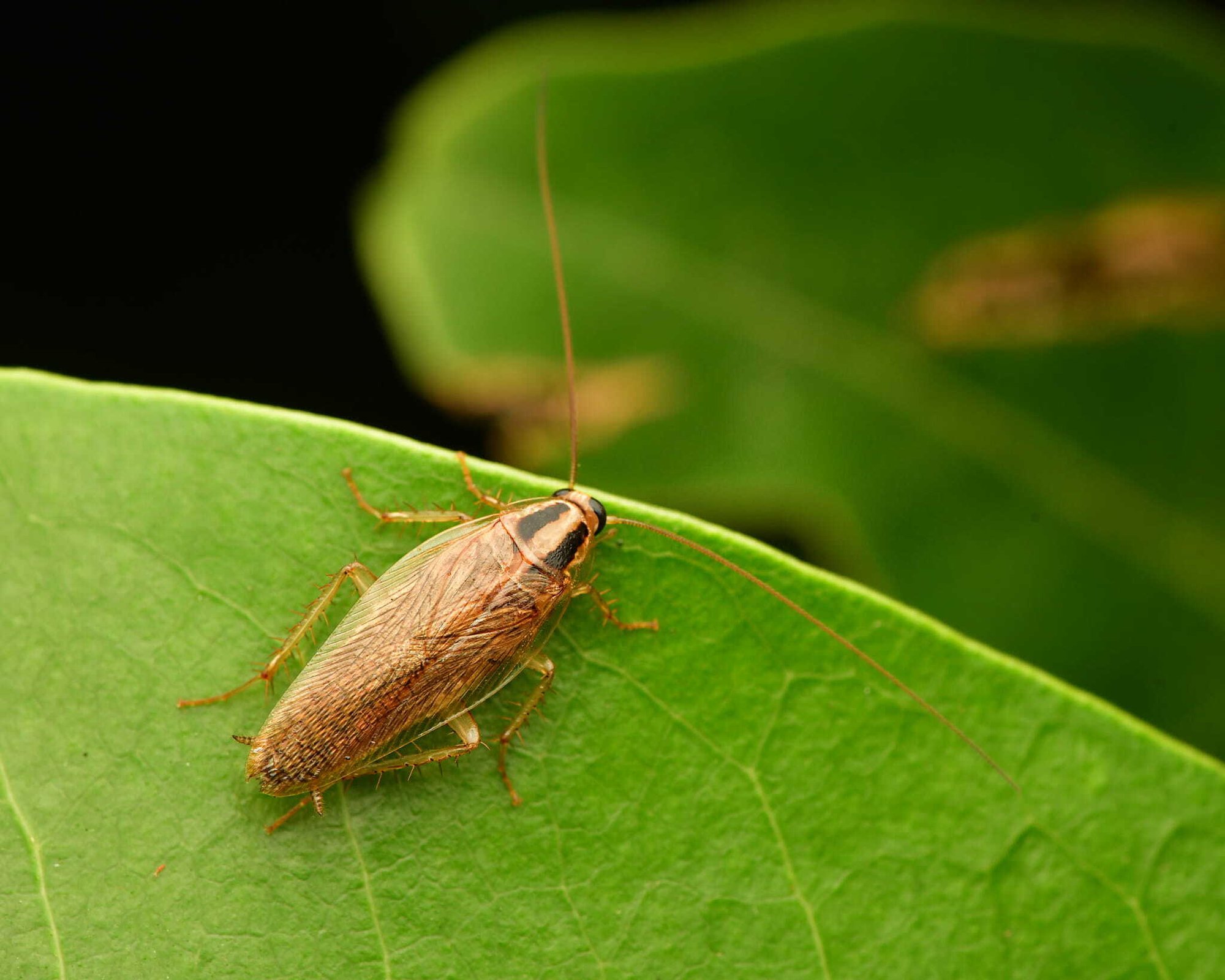
German cockroaches are by far the most common cockroach found in Michigan homes and one of the most challenging cockroach infestations to resolve. They are small, light brown, and identified by two dark parallel stripes running from behind the head down the back. German cockroaches are indoor insects almost exclusively — they rarely survive outside — which means an infestation found in a home arrived through infested grocery bags, secondhand appliances, or shared-wall migration in multi-unit buildings. They reproduce faster than any other domestic cockroach species, with German cockroach populations capable of growing dramatically within a single season if left untreated. German roaches prefer warm, humid environments and concentrate heavily in kitchens and bathrooms, living inside appliance motors, under refrigerators, inside cabinet hinges, and along the inside of drain areas.
.jpg "americancockroach (1)")
American Cockroaches
American cockroaches are the largest cockroach species commonly found in Michigan, growing up to 1.5 inches long. They are reddish-brown with a yellowish figure-eight pattern on the back of the head and are sometimes called "palmetto bugs" or "water bugs." American cockroaches prefer basements, floor drains, crawl spaces, and sewer systems — damp, dark areas with organic matter to feed on. They can fly short distances and occasionally enter homes from outdoors through foundation gaps, floor drains, and utility penetrations. While American cockroaches are less prolific indoors than German cockroaches, they are large enough to be alarming and can contaminate food and surfaces wherever they travel.
Oriental Cockroaches
Oriental cockroaches are about one inch long, shiny black, and commonly found in basements, crawl spaces, and along floor-level areas near moisture. They lack wings and move more slowly than other species, but they produce a notably unpleasant odor and are commonly found around floor drains, under sinks, and in areas with standing moisture. Oriental cockroaches tend to come indoors from outside, often entering through gaps under doors, utility lines, and crawl space vents, which makes exterior exclusion particularly important in controlling them.
%20(1).jpg?width=1024&height=898&name=large%20(7)%20(1).jpg "large (7) (1)")
.jpeg "large (3)")
Brownbanded Cockroaches
Brownbanded cockroaches are smaller and less commonly encountered than German or American cockroaches but worth recognizing because they hide in different areas than most species. Unlike cockroaches that concentrate in kitchens and bathrooms, brownbanded cockroaches prefer drier, warmer locations higher up in a room — inside electronics, in upper cabinet areas, behind wall decorations, and inside furniture in living areas and bedrooms. They are identified by two yellowish bands across their wings. This different distribution across the home means a treatment plan built for German roaches will not effectively control a brownbanded infestation without modification.
Signs of a Cockroach Infestation
Signs of a Cockroach Infestation
Cockroaches are good at staying out of sight, but they leave behind evidence that is worth knowing how to recognize.
- Live roaches during the day. Most cockroaches are nocturnal. Seeing roaches out in the open during daylight hours typically indicates the population is large enough that competition for harborage space is pushing individuals into the open — a sign of a severe infestation that warrants immediate attention.
- Droppings. German cockroach droppings look like small dark specks or ground pepper and are commonly found inside cabinets, along the tops of door frames, and in corners near food sources. Larger species leave larger, cylindrical droppings with ridged sides. Use a flashlight to inspect tight spaces and the insides of cabinet hinges where droppings accumulate.
- Egg cases. Cockroach egg cases, called oothecae, are small, brownish, capsule-shaped casings that are glued to surfaces in protected areas. Finding egg cases behind appliances, inside cabinets, or along baseboards confirms an active breeding population.
- Unpleasant odor. A large cockroach infestation produces a distinctive musty, oily, unpleasant odor caused by pheromones and the decomposition of droppings and body parts. This smell is most noticeable inside heavily infested cabinets or in rooms where cockroaches are concentrated.
- Smear marks. In areas with moisture, cockroaches leave dark, irregular smear marks along baseboards, walls, and surfaces they travel across repeatedly.
- Shed skins. Cockroach nymphs shed their exoskeletons as they grow. Finding shed skins in hidden locations, inside cabinets, under appliances, or in basements, is a reliable sign of an active, breeding population.
Health Risks From Cockroaches
Cockroaches are not just a nuisance — they carry real health risks that make controlling them a priority in any home, particularly one with children, elderly residents, or anyone with respiratory sensitivities. Cockroaches contaminate food and food preparation surfaces as they forage, spreading bacteria including Salmonella and E. coli through contact with their bodies, droppings, and shed skins. They feed on an enormous range of organic materials and have no hesitation moving between garbage, drains, and food storage areas on the same night.
Beyond contamination, cockroach body parts, droppings, and shed skins are a documented trigger for asthma and allergic reactions, particularly in children. Studies have consistently linked cockroach allergens to worsened asthma symptoms in urban households, and the proteins found in cockroach debris are among the more potent indoor allergens identified. For families where asthma is a concern, eliminating a roach infestation is a health priority, not just a comfort one.
Health Risks From Cockroaches
Cockroaches are not just a nuisance — they carry real health risks that make controlling them a priority in any home, particularly one with children, elderly residents, or anyone with respiratory sensitivities. Cockroaches contaminate food and food preparation surfaces as they forage, spreading bacteria including Salmonella and E. coli through contact with their bodies, droppings, and shed skins. They feed on an enormous range of organic materials and have no hesitation moving between garbage, drains, and food storage areas on the same night.
Beyond contamination, cockroach body parts, droppings, and shed skins are a documented trigger for asthma and allergic reactions, particularly in children. Studies have consistently linked cockroach allergens to worsened asthma symptoms in urban households, and the proteins found in cockroach debris are among the more potent indoor allergens identified. For families where asthma is a concern, eliminating a roach infestation is a health priority, not just a comfort one.
How Defender Pest Treats Cockroach Infestations
Cockroach control that works is precise, not broad. The same Integrated Pest Management principles that drive our approach to other pests apply here: inspect thoroughly, identify the species and extent of the infestation, target the actual harborage locations with the right combination of tools, and follow up to confirm the colony has been eliminated. Here is what that looks like in practice.
Thorough Inspection
Every cockroach control service starts with a detailed inspection using a flashlight to examine all the key areas where cockroaches live: inside kitchen and bathroom cabinets, behind and under appliances, along wall-floor junctions, inside electrical outlets and switch plates, under sinks, in basements, and any other areas with warmth, moisture, and shelter. We identify the species involved, map the harborage areas, assess how far the infestation has spread into different areas of the home, and look for the conditions — moisture, food sources, access points — that are sustaining it.
Gel Baits
Gel baits are the cornerstone of professional cockroach control and one of the primary reasons professional pest control consistently outperforms DIY sprays. Cockroach gel baits are applied in small amounts directly inside the cracks and crevices, cabinet edges, and hidden locations where cockroaches actually live. Roaches feed on the bait, return to the colony, and the active ingredient spreads through the population via contact and secondary feeding on affected cockroaches. This domino effect reaches cockroaches that never directly contacted the bait, including those sheltering deep inside walls and appliance motors. Baits can take one to three days to begin killing after ingestion, which is what allows the active ingredient to move through the colony before the first affected cockroach dies.
Insect Growth Regulators
Insect Growth Regulators (IGRs) disrupt cockroach development by interfering with the hormonal processes that allow nymphs to mature into breeding adults. Applied alongside baits, IGRs ensure that even cockroaches that survive initial bait exposure cannot reproduce effectively, which accelerates the collapse of the population over time. This is particularly important for German cockroach infestations given how rapidly that species reproduces.
For the best outcomes, heat and chemical treatments are often used together. Heat handles the immediate population across the treated space while residual chemical treatments and IGRs address any surviving bed bugs or newly hatched eggs in the days and weeks following the initial service.
Dust Treatments
Boric acid dust and other professional-grade dusts are applied inside wall voids, behind outlet plates, under appliance motors, and in other inaccessible areas where gel baits cannot be placed. Boric acid is effective when applied correctly as a thin, even layer in areas where cockroaches travel, coating their legs and body and ingested during grooming. Dust treatments provide long-lasting residual control in areas that are difficult to reach with other methods.
Residual Sprays
Unlike broadcast sprays applied indiscriminately to large surface areas, professional residual sprays are applied precisely to key areas: along baseboards in heavily infested rooms, behind appliances, along the interior perimeter of cabinets, and at entry points. Used in combination with baits and IGRs rather than as a stand-alone method, targeted sprays add a contact kill component and perimeter barrier that complements the bait program.
Glue Traps and Monitoring
Monitoring activity with glue traps placed in key harborage areas helps assess cockroach presence before treatment, gauge the severity of the infestation, and confirm that populations have been eliminated after treatment. Traps placed along walls and in corners where cockroaches travel provide an objective measure of whether the infestation is responding to treatment.
How Defender Pest Treats Cockroach Infestations
Cockroach control that works is precise, not broad. The same Integrated Pest Management principles that drive our approach to other pests apply here: inspect thoroughly, identify the species and extent of the infestation, target the actual harborage locations with the right combination of tools, and follow up to confirm the colony has been eliminated. Here is what that looks like in practice.
Thorough Inspection
Every cockroach control service starts with a detailed inspection using a flashlight to examine all the key areas where cockroaches live: inside kitchen and bathroom cabinets, behind and under appliances, along wall-floor junctions, inside electrical outlets and switch plates, under sinks, in basements, and any other areas with warmth, moisture, and shelter. We identify the species involved, map the harborage areas, assess how far the infestation has spread into different areas of the home, and look for the conditions — moisture, food sources, access points — that are sustaining it.
Gel Baits
Gel baits are the cornerstone of professional cockroach control and one of the primary reasons professional pest control consistently outperforms DIY sprays. Cockroach gel baits are applied in small amounts directly inside the cracks and crevices, cabinet edges, and hidden locations where cockroaches actually live. Roaches feed on the bait, return to the colony, and the active ingredient spreads through the population via contact and secondary feeding on affected cockroaches. This domino effect reaches cockroaches that never directly contacted the bait, including those sheltering deep inside walls and appliance motors. Baits can take one to three days to begin killing after ingestion, which is what allows the active ingredient to move through the colony before the first affected cockroach dies.
Insect Growth Regulators
Insect Growth Regulators (IGRs) disrupt cockroach development by interfering with the hormonal processes that allow nymphs to mature into breeding adults. Applied alongside baits, IGRs ensure that even cockroaches that survive initial bait exposure cannot reproduce effectively, which accelerates the collapse of the population over time. This is particularly important for German cockroach infestations given how rapidly that species reproduces.
For the best outcomes, heat and chemical treatments are often used together. Heat handles the immediate population across the treated space while residual chemical treatments and IGRs address any surviving bed bugs or newly hatched eggs in the days and weeks following the initial service.
Dust Treatments
Boric acid dust and other professional-grade dusts are applied inside wall voids, behind outlet plates, under appliance motors, and in other inaccessible areas where gel baits cannot be placed. Boric acid is effective when applied correctly as a thin, even layer in areas where cockroaches travel, coating their legs and body and ingested during grooming. Dust treatments provide long-lasting residual control in areas that are difficult to reach with other methods.
Residual Sprays
Unlike broadcast sprays applied indiscriminately to large surface areas, professional residual sprays are applied precisely to key areas: along baseboards in heavily infested rooms, behind appliances, along the interior perimeter of cabinets, and at entry points. Used in combination with baits and IGRs rather than as a stand-alone method, targeted sprays add a contact kill component and perimeter barrier that complements the bait program.
Glue Traps and Monitoring
Monitoring activity with glue traps placed in key harborage areas helps assess cockroach presence before treatment, gauge the severity of the infestation, and confirm that populations have been eliminated after treatment. Traps placed along walls and in corners where cockroaches travel provide an objective measure of whether the infestation is responding to treatment.
The Defender Pest Cockroach Service Program
Scheduling
Defender Pest offers 24-hour scheduling for cockroach control services. Contact us by phone or through our online quote form and we will get your appointment on the calendar quickly — you should not have to wait out an active roach infestation.
Pricing
Cockroach treatment starts at $350 for the kitchen, which is where the majority of German cockroach infestations are concentrated. Each additional room is $150. Heavier infestations that have spread to multiple areas of the home are scoped accordingly. Pricing varies based on the extent of the infestation and the treatment required — Defender Pest provides a free inspection so you receive an accurate quote before any work begins.
Ready to Protect Your Home?
No matter which corner of Michigan you call home, Defender Pest brings the same commitment to every yard we treat; professional service, certified technicians, and a protection plan built around your season. Ready to get started?
Give us a call or request your free quote online today.
Ready to Protect Your Home?
No matter which corner of Michigan you call home, Defender Pest brings the same commitment to every yard we treat; professional service, certified technicians, and a protection plan built around your season. Ready to get started?
How to Prepare Your Home Before Treatment
A few preparation steps before your service appointment make a meaningful difference in how thoroughly our technicians can treat harborage areas and how quickly the infestation responds. [Placeholder: link to Defender Pest cockroach prep document when available. Client to review and confirm prep requirements for accuracy.]
Kitchen and Cabinets
Empty the contents of kitchen cabinets and under-sink cabinets before treatment so our technicians have full access to the interior surfaces, hinges, and corners where cockroaches concentrate. Place items in boxes or bags away from the treatment area. After treatment, wait the recommended amount of time before replacing items — your technician will advise on the appropriate window.
Appliances
Pull the refrigerator and stove away from the wall before your appointment if possible. The motors and compressors on the undersides and backs of these appliances are prime harborage for German cockroaches, and access to these areas is critical for a thorough treatment. Leave them pulled out until your technician has finished.
Food and Dishes
Remove food items, dishes, and utensils from the treatment area and store them in a separate room. Food should be sealed in containers or bags so it is not exposed to treatment products. Countertops should be clear before the technician arrives.
Pets and People
People and pets should stay out of treated areas for the time period your technician specifies after treatment. This is standard practice and your technician will give you clear guidance on re-entry timing based on the products used.
After Treatment
Do not spray any over-the-counter products in treated areas between visits. Repellent sprays disrupt bait placement and can drive cockroaches away from the bait before they have had a chance to feed on it, undermining the treatment program. If you see cockroach activity between visits, that is expected — the bait is working through the colony. Contact Defender Pest if you have concerns and we will advise accordingly.
How to Prepare Your Home Before Treatment
A few preparation steps before your service appointment make a meaningful difference in how thoroughly our technicians can treat harborage areas and how quickly the infestation responds. [Placeholder: link to Defender Pest cockroach prep document when available. Client to review and confirm prep requirements for accuracy.]
Kitchen and Cabinets
Empty the contents of kitchen cabinets and under-sink cabinets before treatment so our technicians have full access to the interior surfaces, hinges, and corners where cockroaches concentrate. Place items in boxes or bags away from the treatment area. After treatment, wait the recommended amount of time before replacing items — your technician will advise on the appropriate window.
Appliances
Pull the refrigerator and stove away from the wall before your appointment if possible. The motors and compressors on the undersides and backs of these appliances are prime harborage for German cockroaches, and access to these areas is critical for a thorough treatment. Leave them pulled out until your technician has finished.
Food and Dishes
Remove food items, dishes, and utensils from the treatment area and store them in a separate room. Food should be sealed in containers or bags so it is not exposed to treatment products. Countertops should be clear before the technician arrives.
Pets and People
People and pets should stay out of treated areas for the time period your technician specifies after treatment. This is standard practice and your technician will give you clear guidance on re-entry timing based on the products used.
After Treatment
Do not spray any over-the-counter products in treated areas between visits. Repellent sprays disrupt bait placement and can drive cockroaches away from the bait before they have had a chance to feed on it, undermining the treatment program. If you see cockroach activity between visits, that is expected — the bait is working through the colony. Contact Defender Pest if you have concerns and we will advise accordingly.

Frequently Asked Questions About Cockroach Control
Does professional pest control get rid of roaches?
Yes, and significantly more reliably than DIY methods. Professional cockroach control uses commercial-grade gel baits, IGRs, and dust treatments applied precisely in the harborage areas where cockroaches actually live. This combination reaches the colony directly rather than scattering it, and the follow-up structure confirms the infestation has been fully resolved. Defender Pest backs every cockroach control service with a 30-day guarantee and return visits if activity persists.
What do professional exterminators use for cockroaches?
A professional cockroach exterminator uses a combination of tools rather than a single product. Gel baits placed inside cracks and crevices and harborage areas spread through the colony as cockroaches feed and interact. IGRs disrupt reproduction and accelerate population collapse. Boric acid dust is applied in wall voids and behind appliances where roaches shelter. Targeted residual sprays are used along baseboards and entry points. Glue traps are placed for monitoring. The combination and placement vary based on the species and the extent of the infestation, which is why a thorough inspection comes first on every job.
How much does it cost to get rid of a roach infestation?
Defender Pest prices cockroach treatment starting at $350 for the kitchen plus $150 for each additional room affected. More severe infestations that have spread throughout the home are priced based on the scope of the work required. Pricing is determined after a free inspection so you receive an accurate quote before any service begins. Two treatments are included in the program, and a 30-day guarantee covers you after the final visit.
How do exterminators get rid of roaches?
The process starts with a thorough inspection to identify the species, locate all harborage areas, and assess how far the infestation has spread. From there, gel baits are placed in the cracks, crevices, and hidden locations where cockroaches live and feed. IGRs are applied to disrupt reproduction. Dust treatments reach areas inaccessible to bait. Targeted sprays are applied along baseboards and entry points. A follow-up treatment ensures anything the first visit did not fully reach is addressed before the colony can recover. Monitoring with glue traps confirms the infestation is responding.
What gets rid of roaches permanently?
Permanent cockroach control requires eliminating the colony, not just reducing visible roach activity. That means reaching cockroaches in the hidden locations where they breed, using products that spread through the population rather than repelling it, and eliminating the conditions that initially attracted them. Sealing cracks and entry points, fixing moisture problems, and maintaining clean food storage practices after treatment are what prevent the next infestation. Cockroaches that have been fully eliminated from a clean, well-sealed home do not simply return on their own.
What is the most effective pest control for cockroaches?
The most effective cockroach pest control combines professional gel baits, IGRs, and dust treatments applied by a trained technician following a detailed inspection. Gel baits in particular outperform sprays because they reach the colony directly through secondary feeding rather than requiring every individual cockroach to contact the product. IGRs prevent surviving cockroaches from reproducing effectively, which accelerates population collapse. This combination, applied correctly to the right locations based on species and infestation extent, consistently outperforms any single-method or DIY approach.
Is one treatment enough to get rid of cockroaches?
For most infestations, a one-time treatment alone is not sufficient. Cockroach egg cases are protected from many chemical treatments and hatch in the days and weeks after the initial service, introducing a new generation of nymphs. The second treatment in the Defender Pest program is specifically designed to address this — catching the population while it is at its most vulnerable and before survivors can re-establish. The 30-day guarantee period provides additional coverage if any activity resurfaces after both visits are complete.
Frequently Asked Questions About Cockroach Control
Does professional pest control get rid of roaches?
Yes, and significantly more reliably than DIY methods. Professional cockroach control uses commercial-grade gel baits, IGRs, and dust treatments applied precisely in the harborage areas where cockroaches actually live. This combination reaches the colony directly rather than scattering it, and the follow-up structure confirms the infestation has been fully resolved. Defender Pest backs every cockroach control service with a 30-day guarantee and return visits if activity persists.
What do professional exterminators use for cockroaches?
A professional cockroach exterminator uses a combination of tools rather than a single product. Gel baits placed inside cracks and crevices and harborage areas spread through the colony as cockroaches feed and interact. IGRs disrupt reproduction and accelerate population collapse. Boric acid dust is applied in wall voids and behind appliances where roaches shelter. Targeted residual sprays are used along baseboards and entry points. Glue traps are placed for monitoring. The combination and placement vary based on the species and the extent of the infestation, which is why a thorough inspection comes first on every job.
How much does it cost to get rid of a roach infestation?
Defender Pest prices cockroach treatment starting at $350 for the kitchen plus $150 for each additional room affected. More severe infestations that have spread throughout the home are priced based on the scope of the work required. Pricing is determined after a free inspection so you receive an accurate quote before any service begins. Two treatments are included in the program, and a 30-day guarantee covers you after the final visit.
How do exterminators get rid of roaches?
The process starts with a thorough inspection to identify the species, locate all harborage areas, and assess how far the infestation has spread. From there, gel baits are placed in the cracks, crevices, and hidden locations where cockroaches live and feed. IGRs are applied to disrupt reproduction. Dust treatments reach areas inaccessible to bait. Targeted sprays are applied along baseboards and entry points. A follow-up treatment ensures anything the first visit did not fully reach is addressed before the colony can recover. Monitoring with glue traps confirms the infestation is responding.
What gets rid of roaches permanently?
Permanent cockroach control requires eliminating the colony, not just reducing visible roach activity. That means reaching cockroaches in the hidden locations where they breed, using products that spread through the population rather than repelling it, and eliminating the conditions that initially attracted them. Sealing cracks and entry points, fixing moisture problems, and maintaining clean food storage practices after treatment are what prevent the next infestation. Cockroaches that have been fully eliminated from a clean, well-sealed home do not simply return on their own.
What is the most effective pest control for cockroaches?
The most effective cockroach pest control combines professional gel baits, IGRs, and dust treatments applied by a trained technician following a detailed inspection. Gel baits in particular outperform sprays because they reach the colony directly through secondary feeding rather than requiring every individual cockroach to contact the product. IGRs prevent surviving cockroaches from reproducing effectively, which accelerates population collapse. This combination, applied correctly to the right locations based on species and infestation extent, consistently outperforms any single-method or DIY approach.
Is one treatment enough to get rid of cockroaches?
For most infestations, a one-time treatment alone is not sufficient. Cockroach egg cases are protected from many chemical treatments and hatch in the days and weeks after the initial service, introducing a new generation of nymphs. The second treatment in the Defender Pest program is specifically designed to address this — catching the population while it is at its most vulnerable and before survivors can re-establish. The 30-day guarantee period provides additional coverage if any activity resurfaces after both visits are complete.