

Quick answer: Mice and rats move indoors in fall because falling temperatures and shrinking outdoor food supplies push them to look for warm, sheltered places to nest through winter. Homes offer all three things they need: warmth, food, and protection. A professional rodent inspection looks for entry points as small as a dime, droppings, gnaw marks, grease rub marks, nesting materials, and the outdoor conditions—like mulch, leaf piles, and overgrown shrubs—that draw rodents toward your foundation in the first place.
Key Takeaways
- Rodent activity indoors typically rises from September through November as nights get colder.
- A mouse can squeeze through a gap about 1/4 inch wide (roughly the size of a dime); a rat can fit through about 1/2 inch (roughly the size of a quarter).
- The most common signs are droppings, gnaw marks, scratching sounds at night, and shredded nesting material.
- A good inspection covers the exterior, the landscape, entry points, and interior hot spots like attics, basements, garages, and kitchens.
- Sealing entry points and reducing outdoor harborage is more effective long-term than trapping alone.
Why Do Mice and Rats Come Inside in the Fall?
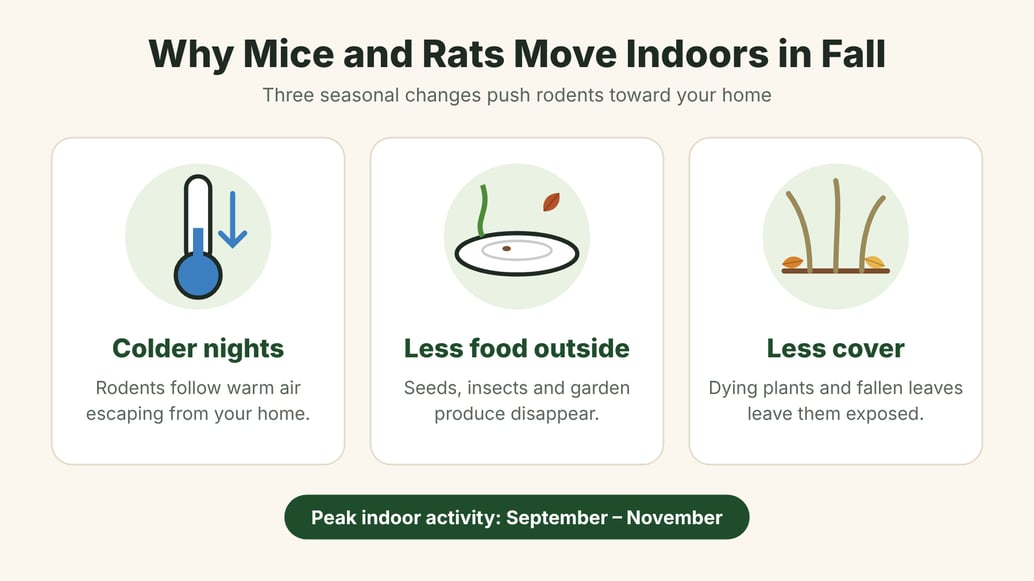
Mice and rats come inside in the fall to survive winter. They don't hibernate, so they need a steady source of warmth, food, and water when outdoor conditions turn harsh. Three seasonal changes drive the move:
- Dropping temperatures. As nights cool, rodents follow warm air escaping from foundations, vents, and gaps around utility lines.
- Disappearing food. Seeds, insects, garden produce, and fallen fruit become scarce after the growing season ends.
- Loss of cover. When vegetation dies back and leaves fall, rodents lose the outdoor shelter that protected them from predators all summer.
Fall is also when rodents are looking for a secure place to nest and breed. Once a pair of mice settles into a wall void or attic, a population can grow quickly—house mice can reach breeding age in about six to eight weeks.
How Do Mice and Rats Get Into a House?
Mice and rats get into a house through small gaps in the exterior, usually at or near ground level. Rodents have flexible skeletons and will chew to widen an opening that's almost big enough. The most common entry points include:
- Gaps where pipes, cables, and HVAC lines enter the home
- Worn or missing garage door seals and weatherstripping
- Foundation cracks and gaps along the sill plate
- Dryer vents, attic vents, and soffits without proper screening
- Openings around crawl space doors and basement windows
- Roof lines, gutters, and tree branches that touch the house (especially for climbing roof rats)
What's the Difference Between a Mouse and a Rat Problem?
The main differences are size, behavior, and where they nest. Knowing which rodent you have shapes how an inspection and treatment plan are set up.
| Feature | House Mouse | Norway Rat | Roof Rat |
|---|---|---|---|
| Body size | About 2.5–3.5 in. | About 7–10 in. | About 6–8 in. |
| Minimum gap | ~1/4 in. (dime) | ~1/2 in. (quarter) | ~1/2 in. (quarter) |
| Droppings | Small, pointed, ~1/8–1/4 in. | Large, blunt, ~3/4 in. | Pointed, ~1/2 in. |
| Typical nesting spots | Wall voids, cabinets, insulation, appliances | Burrows near foundations, basements, crawl spaces | Attics, upper walls, trees, dense vegetation |
| Behavior | Curious; explores new objects | Cautious; avoids new objects | Agile climber; travels along wires and branches |
What Are the Signs of Mice or Rats in Your Home?
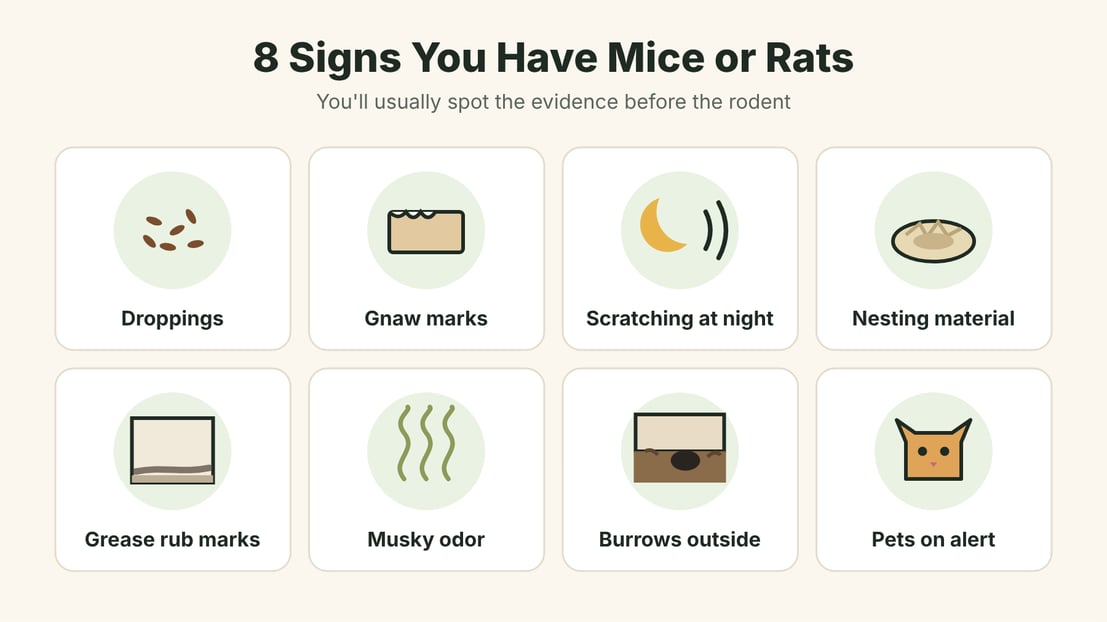
The most reliable signs of rodents are droppings, gnaw marks, and noises at night. Because rodents are mostly nocturnal, homeowners often see the evidence before they see the animal. Watch for:
- Droppings along walls, in cabinets, under sinks, or behind appliances
- Gnaw marks on food packaging, baseboards, wiring, or storage boxes
- Scratching or scurrying sounds in walls, ceilings, or attics, especially at night
- Nesting material such as shredded paper, fabric, or insulation
- Grease or rub marks—dark smudges along walls and baseboards where rodents travel repeatedly
- A musky, ammonia-like odor in enclosed spaces
- Burrows near the foundation, under decks, or along fence lines (common with Norway rats)
- Pets acting alert or pawing at a specific wall or appliance
Why Are Rodents in the House a Problem?
Rodents in the house are a problem because they damage property and can contaminate food and surfaces. Their teeth grow continuously, so they gnaw on almost anything—including electrical wiring, which can create a fire hazard. They also shred insulation, contaminate stored food with urine and droppings, and can carry disease-causing bacteria and viruses. Because they breed quickly, a small problem in October can become a much larger one by midwinter.
What Does a Professional Rodent Inspection Look For?
A professional rodent inspection looks for four things: how rodents are getting in, where they are active, how many there are, and what's attracting them. A thorough inspection usually covers the following areas.
1. Exterior and Foundation
The inspector walks the full perimeter of the home looking for gaps, cracks, and openings around the foundation, siding, utility penetrations, vents, and garage doors. Any opening a pencil can fit into is a potential mouse entry point.
2. Landscape and Yard Conditions
Your yard plays a bigger role than most people realize. An inspector checks for conditions that give rodents food and cover right next to your house, such as:
- Thick mulch beds piled against the foundation
- Leaf piles, grass clippings, and yard debris
- Overgrown shrubs, ground cover, or ivy touching the siding
- Tree limbs overhanging or touching the roof
- Firewood stacked near the home
- Bird feeders, fallen fruit, pet food, and unsecured trash or compost
- Burrows in garden beds, under decks, and along fences
3. Roofline and Attic
Inspectors check soffits, roof vents, chimney openings, and gutters, then look inside the attic for droppings, trails through insulation, nests, and chewed wiring. Attics are a favorite nesting spot because they're warm and rarely disturbed.
4. Interior Hot Spots
Inside, the inspection focuses on areas with warmth, food, and water: kitchens, pantries, under sinks, behind appliances, utility rooms, basements, crawl spaces, and garages. The inspector looks for droppings, rub marks, gnawing, and travel paths along walls.
5. Activity Level and Species
By reading the size, number, and freshness of droppings and other evidence, an inspector can identify whether you're dealing with mice or rats and estimate how established the population is. That determines the right mix of exclusion, trapping, and monitoring.
6. A Clear Action Plan
A good inspection ends with specific recommendations: which entry points to seal, which yard conditions to fix, where to place traps or monitoring stations, and when to follow up.
How Can You Keep Mice and Rats Out This Fall?
The best way to keep mice and rats out is to remove what attracts them and block the ways they get in. Start with these steps:
- Seal entry points with steel wool, copper mesh, hardware cloth, or metal flashing—rodents can chew through foam, rubber, and plastic.
- Pull mulch back a few inches from the foundation and keep beds from piling up against siding.
- Clear leaves and yard debris promptly, especially near the house.
- Trim shrubs and tree limbs so nothing touches the roof or siding.
- Store firewood off the ground and away from the home.
- Secure food sources: use sealed trash bins, bring pet food inside, and clean up birdseed and fallen fruit.
- Install door sweeps and replace worn garage door seals.
- Schedule an inspection in early fall, before rodents settle in for winter.
When Should You Call a Professional?
You should call a professional if you see any rodent activity indoors, find droppings in more than one area, hear noises in walls or ceilings, or notice chewed wiring. One mouse you see usually means more you don't. Professionals can find hidden entry points, handle exclusion work safely, and set up monitoring so the problem doesn't return.
Frequently Asked Questions
What month do mice start coming into houses?
Mice typically start coming into houses in September and October, when nighttime temperatures begin to drop. Activity often peaks in late fall and continues through winter.
Can mice get through a hole the size of a dime?
Yes. A house mouse can fit through an opening about 1/4 inch wide, roughly the size of a dime. Rats need about 1/2 inch, roughly the size of a quarter.
If I see one mouse, are there more?
Usually, yes. Mice are social, breed quickly, and are active mostly at night, so seeing one during the day often means there are others nearby.
Does mulch attract mice and rats?
Thick mulch piled against a foundation can give rodents cover and nesting material right next to your home. Keeping mulch a few inches from the foundation and not overly deep helps reduce that risk.
Will mice leave on their own in spring?
Not usually. Once mice find food, water, and a safe nest indoors, they have little reason to leave. Without exclusion and removal, populations typically keep growing.
How long does a rodent inspection take?
A typical residential rodent inspection takes about 30 to 60 minutes, depending on the size of the home and how many areas—like attics and crawl spaces—need to be checked.
What's the most important part of rodent control?
Exclusion—sealing the gaps rodents use to get in—is the most important long-term step. Trapping removes the rodents already inside, but sealing entry points keeps new ones from replacing them.
Protect Your Home Before Winter Sets In
Fall is the best time to stop a rodent problem before it starts. A professional inspection finds the gaps, yard conditions, and early warning signs that are easy to miss—so you can fix them before mice and rats settle in for the season. Contact Lush Lawn to schedule your fall rodent inspection today.